The Machine That Was Always You: Cybernetics, Self-Image, and Why AI's Disruption Is an Inside Job
Feb 16, 2026Want to go deeper?🎙️ Listen to the Make Your Own World Podcast — streaming now on YouTube, Spotify, & Apple.
You've felt it. Maybe at 3 AM, scrolling through another headline about automation replacing another profession. Maybe in a quieter moment, a tightness in your chest when a colleague mentions how quickly AI now does what took you years to master.
That feeling isn't weakness. It's your nervous system telling you something important: the ground is shifting beneath the story you've built your life on.
But here's what almost nobody is saying in the noise of AI discourse, this isn't actually about technology. It never was.
The Architect of Purpose
It starts with a mathematician who built weapons.
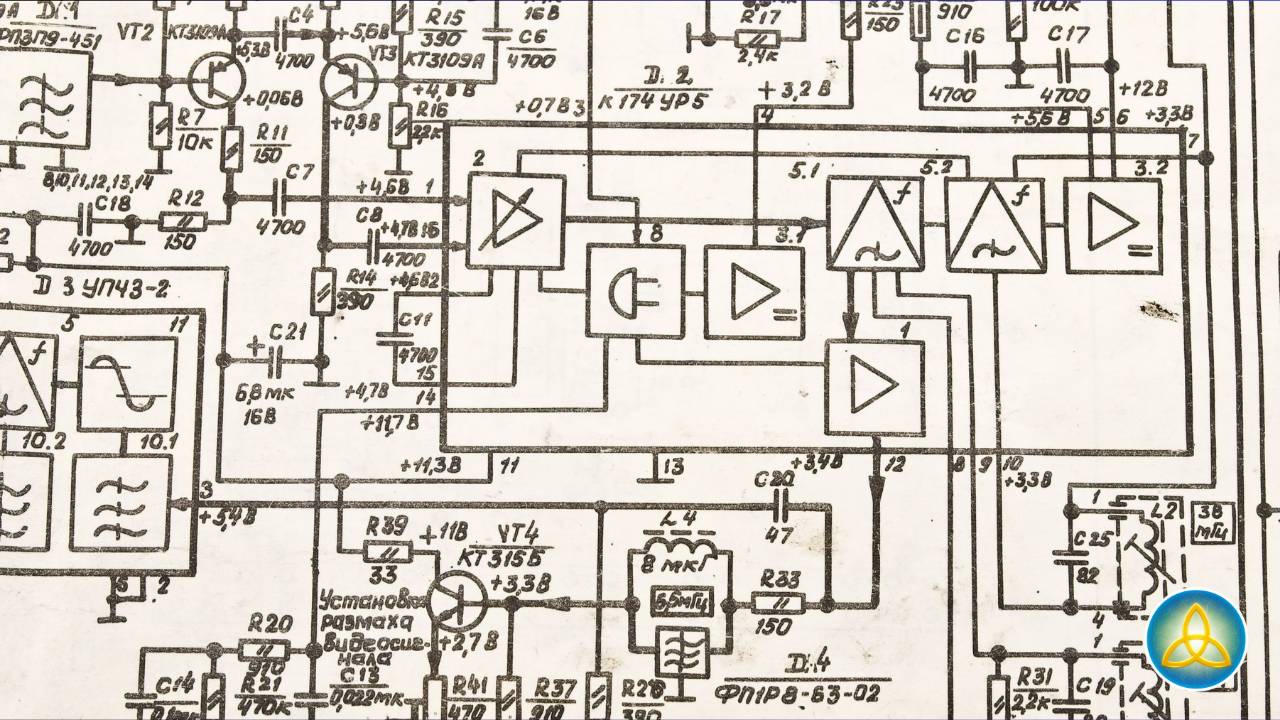
In the 1940s, Norbert Wiener, the father of cybernetics, designed an anti-aircraft predictor for the Allied forces. The machine's task was deceptively simple: track a moving target and anticipate where it would be next. It did this through feedback loops, constantly receiving information, adjusting, correcting course, and firing.
Wiener recognized something profound in what he'd built. The predictor wasn't just calculating trajectories. It was exhibiting purposeful behavior — the mechanical imitation of intent. He spent the rest of his career exploring what that meant, eventually publishing Cybernetics in 1948 and warning that these same principles would reshape civilization.
He was right. Eighty years later, the feedback loops Wiener described now power systems that write legal briefs, compose music, diagnose illness, and generate images indistinguishable from photographs. Brian Roemmele, in Part 12 of his podcast series You Have 5000 Days, maps this trajectory with uncommon clarity. He calls the period we're entering the "abundance interregnum" — a 13.7-year passage in which machines progressively sever the ancient link between survival and labor.
Roemmele frames this through Joseph Campbell's hero's journey and the Kübler-Ross grief model. Denial. Despair. And then — if we're willing — reversal. Not a return to what was, but a resurrection into something we haven't yet imagined.
It's a compelling framework. And there's a brilliant thread Roemmele hints at — one that changes everything about how you navigate what's coming.
The Mirror Behind the Mirror
In 1960, a plastic surgeon named Maxwell Maltz published a book called Psycho-Cybernetics. Maltz had noticed something troubling in his practice. He could reshape a patient's nose, smooth a scar, reconstruct a jaw — and some patients would transform. Their confidence shifted. Their entire lives reorganized around the new reflection.
But others? The surgery was flawless, the external result undeniable, and yet nothing changed. They couldn't see it, no matter how clearly the mirror showed it.
Maltz realized the issue wasn't the mirror. It was the image behind the image — the internal portrait each person carried of who they believed themselves to be. He called it the self-image, and he recognized that it operated exactly like Wiener's systems: as a goal-seeking mechanism. Your nervous system locks onto whatever target your self-image sets, then organizes your perception, behavior, emotions, and even your opportunities around reaching it. Change the external circumstances without changing the internal image, and the system simply steers you back to the old coordinates.
Same cybernetic principle. Radically different application.
Mitch Horowitz, in Happy Warriors: The Lives and Ideas of the Positive-Mind Mystics, places Maltz within a lineage that most technologists would never think to consult. Horowitz examines the positive-mind tradition with careful, grounded scholarship — connecting Maltz's cybernetic self-image work to the broader metaphysical understanding that consciousness itself operates as a creative, goal-oriented system. He considers Psycho-Cybernetics a work of tremendous insight, one that bridges technical science with something older and harder to name.
This is the connection that matters. And it's the one almost everyone is missing.
When the Target Vanishes
When AI automates your profession, it doesn't just threaten your income. It disrupts the target coordinates your entire internal guidance system has been locked onto — sometimes for decades. Your identity as a writer, a coder, a designer, a strategist, a therapist, a teacher — that isn't just a job description. It's the self-image around which your nervous system has organized your sense of worth, your daily rhythms, your answer to the question who am I?
Remove that target and you don't get a neutral reset. You get a system in freefall — scanning for a lock it can't find, generating anxiety not because something is wrong with you, but because your internal guidance mechanism is doing exactly what it was designed to do: alerting you that the coordinates are gone.
This is why AI anxiety so often feels existential rather than practical. Because it is existential — at the level of self-image. And no amount of reskilling, pivoting, or optimistic thought-leadership addresses a disruption that lives in your nervous system's deepest architecture.
But Maltz's work, read alongside Wiener's, offers something far more useful than reassurance. It offers a mechanism.
Conscious Recalibration
If your self-image is a cybernetic system, then it responds to the same principles that govern every feedback loop Wiener described. It receives input. It compares that input to its target. It adjusts.
The question isn't whether your internal system will recalibrate. It will — it has no choice, because that's what cybernetic systems do. The question is whether you'll participate consciously in setting the new target, or whether you'll let fear, grief, and cultural noise set it for you.
This is where practice becomes essential, not as self-improvement, but as self-authorship.
Roemmele offers five tools for thriving in the interregnum, and each one becomes more powerful when you understand the cybernetic logic beneath it:
Engineer daily reflection loops. End your day in honest dialogue — with yourself, with whatever tools serve your clarity. Not to optimize productivity, but to close the feedback loop your nervous system needs. What did I notice today? Where did I contract? Where did I expand? Wiener understood that a system without feedback drifts into entropy — the slow slide toward disorder that only conscious attention corrects. Your inner life is no different.
Infuse your tools with your values. When you engage with AI, bring your humanity to the exchange. Ask for outputs rooted in dignity, beauty, ethics. "Do no harm." This isn't sentimentality — it's Licklider's symbiosis in practice. The human sets the soulful coordinates. The machine handles the mechanical labor. Partnership, not replacement.
Reclaim what your hands know. Woodworking. Gardening. Cooking. Journaling by hand. These aren't nostalgic retreats — they're somatic anchors. When your identity is in freefall, your body offers ground. The tactile world doesn't need to be validated by an algorithm.
Gather without screens. Create spaces for unmediated human exchange. Let AI help you prepare better questions, then put it away and sit with other people in the honest uncertainty of not knowing what comes next. Presence can't be automated, and it can't be practiced alone.
Pursue what machines cannot own. Mentorship. Repair — of objects, of relationships, of trust. Philosophy. Spiritual companionship. The vocations that require a human being who has been through something and can sit with another human being who is going through it now. This is soul work. It doesn't scale, and that's precisely what makes it irreplaceable.
The System That Sets the Target
Here's what I want you to sit with.
The same cybernetic architecture that powers the systems generating so much collective anxiety is the architecture that lives inside you — the feedback loops of your own awareness, constantly adjusting toward whatever image you hold of who you are and who you're becoming.
Wiener mapped it in machines. Maltz mapped it in the psyche. Horowitz traced its roots through a lineage of thinkers who understood, long before AI, that consciousness is creative and directional — that what you hold in your inner vision shapes what unfolds in your outer life.
The abundance interregnum isn't just an economic passage. It's a collective recalibration of self-image — millions of people whose internal guidance systems are losing their old target and searching, sometimes desperately, for a new one.
That search doesn't have to be desperate. It can be deliberate. It can even be sacred.
Not because the disruption isn't real. It is. But because you are, and have always been, the system that sets the target. The feedback loop that matters most isn't happening in a server farm. It's happening in the quiet space between what you fear you're losing and what you haven't yet dared to envision.
That's the real work of this moment. Not reskilling. Not outrunning the machine.
Remembering that the most sophisticated guidance system in the room has always been you.
James O'Neill is a licensed clinical professional counselor with over 20 years of experience, trained at Johns Hopkins, and the founder of Journey Mindfulness. He works with men navigating divorce, identity disruption, high-achiever burnout, and the space between external success and internal truth. He sees clients in person in Columbia, Maryland and virtually anywhere.
If something in this piece resonated, you are welcome to a free 15-minute conversation. No pressure, no pitch, just an honest talk about what is going on and whether this work is the right fit.