The Forgotten Healer: What Émile Coué Understood About Lasting Change
Jan 21, 2026Want to go deeper?🎙️ Listen to the Make Your Own World Podcast — streaming now on YouTube, Spotify, & Apple.
Émile Couè and Autosuggestion
One of the most influential figures in modern self-help is someone most people have never heard of—or worse, know only as a punchline.
Émile Coué treated 40,000 patients a year at his free clinic in Nancy, France. He worked with conditions ranging from insomnia to paralysis, anxiety to chronic pain, both mental and physical ailments. The King's physician endorsed him. Julian Huxley praised him publicly. Maxwell Maltz, Napoleon Hill, Norman Vincent Peale, the entire positive thinking movement traces back to his work.
And yet today, he's remembered only for a single phrase people mistakenly mock:
"Every day, in every way, I'm getting better and better."
That reduction is a tragedy. Because Coué understood something about belief change that most modern teachers still get wrong.
A Pharmacist Who Noticed Something Strange
Coué wasn't a mystic or a guru. He was a French pharmacist who made an unusual observation: how he delivered medicine affected outcomes. The same prescription, given with confidence and encouragement, worked better than when dispensed with indifference. Belief amplified efficacy.
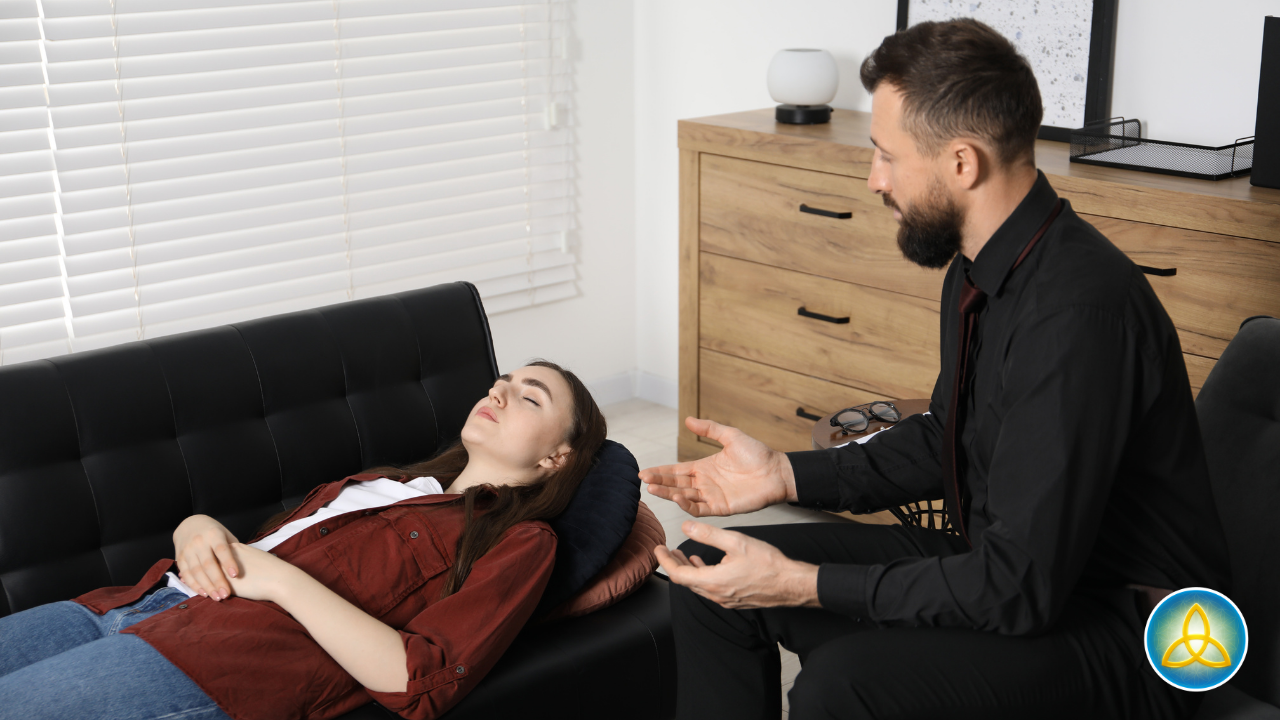
This led him to study at the Nancy School of Hypnosis under Liébault in the 1880s. But by 1910, he had abandoned classical hypnosis entirely. His reason was practical, he found that the effects of hypnosis often faded once patients regained normal consciousness. The change didn't hold.
So he developed something different: conscious autosuggestion. Rather than putting people into trance and implanting suggestions, he taught them to work with their own minds. He opened a free clinic at his home and ran it for sixteen years.
When asked if he was a healer, his answer was consistent: "I have never cured anyone in my life. All I do is show people how they can cure themselves."
This wasn't false modesty. It was his core philosophy. Empowerment, not dependency.
The Principle Most People Miss
Coué's foundational insight was simple but profound:
"When the imagination and the will are in conflict, the imagination always wins."
This isn't mysticism. This is how the nervous system actually works.
Willpower operates consciously. Imagination operates unconsciously. And the unconscious governs our physiology, our emotions, our automatic behaviors—everything that runs below the surface of deliberate thought.
When we try to force a belief through sheer will, we create resistance. The harder we push, the more the unconscious pushes back. But when imagination accepts something as true, the body follows naturally.
We can't muscle our way into a new identity. The nervous system doesn't respond to demands. It responds to what it perceives as real.
What Actually Changes Belief
Here's where it gets precise.
This is the core mechanism:
The subconscious is largely indifferent to the medium, whether it's affirmations, visualization, prayer, hypnosis, or ritual. It responds to one thing: emotion combined with belief.
When sufficient emotional charge meets even momentary belief that something is true, suggestion lands. The shift registers. This is hypnosis in the clinical sense, not stage tricks, not swinging watches. Just the conditions under which the unconscious accepts new information.
When change doesn't hold, it's usually because one ingredient was missing. Emotion without belief produces catharsis that fades. Belief without emotion produces intellectual understanding that doesn't reorganize anything. We need both, meeting at the same moment.
Why Modern Affirmations Often Fail
Most people practicing affirmations are unknowingly violating everything Coué taught.
They strain to believe. They monitor obsessively for results. They use confrontational language, "I am wealthy," "I am confident"—while their body knows otherwise and rejects the suggestion. They practice during stress or distraction, when resistance is highest.
Coué's actual method was different in every way.
He prescribed specific timing: upon waking or before sleep, during those drowsy transitional states when the conscious mind relaxes its grip. He insisted on a gentle tone, almost bored, like stating the weather. No emphasis, no intensity, no trying. He had patients repeat suggestions twenty times using a string of knotted beads, not for any mystical reason, but to occupy the conscious mind so it wouldn't interfere.
And critically, he warned against monitoring. "Is it working?" activates the will. That collapses the effect. The goal is familiarity, not persuasion. We're not trying to convince ourselves. We're allowing a new possibility to become ordinary.
His famous phrase makes more sense in this light. "Every day, in every way, I'm getting better and better" isn't confrontational. It doesn't claim we're already healed. It's permissive, open-ended, allowing the unconscious to find its own path to improvement without triggering the inner skeptic.
The Question of What Holds
Here's where honesty matters.
Coué documented cases where a single session produced lasting change. So did Milton Erickson. I've witnessed it myself, someone enters a session with a belief that's troubled them for years and walks out reorganized.
But I've also seen the opposite. Powerful breakthroughs that fade within weeks. Insight that doesn't translate into lived change. The flash of clarity that dissolves back into old patterns. The rubber band effect.
So which is true? Can change be instant, or does it require sustained reinforcement?
Both. Anyone claiming only one of these is selling something.
The question is what determines which.
What I Learned From My Own Path
In my own experience, anxiety, chronic pain, and healing self-love required the longer road.
Not because I didn't understand what needed to shift, I did. I could articulate the patterns, trace their origins, see how they were limiting me. But understanding isn't the same as the subconscious accepting something as true.
For me, those particular territories were heavily defended. My system couldn't access emotion and belief simultaneously around them. The defenses kept the two ingredients from meeting. Every time I approached with will and effort, the resistance matched it.
What worked was sustained practice. Repeated exposure. The slow accumulation of moments where emotion and belief could finally converge without my defenses interfering. Not forcing, but creating the conditions. Again and again, until the new pattern became more familiar than the old one.
I don't share this to suggest everyone needs the longer road. Some people flip the switch in a single powerful experience. I've witnessed that too, and it's real.
But I needed what I needed. And there's no shame in that. The path that actually works is the right path, however long it takes.
The Variable That Matters
The more I've worked with people over twenty years, the more I've come to see that the variable isn't willpower, intelligence, or even desire.
It's whether emotion and belief can meet in the same moment, around the specific issue we're trying to shift.
Some topics are lightly defended. The ingredients converge easily. Change happens fast.
Other topics, often the deepest ones, the ones tangled up with identity, safety, and old wounds, are heavily guarded. The system needs repeated proof that it's safe to let the new belief in. That's not failure. That's just how the nervous system protects itself.
Coué's method, properly understood, is a way of lowering resistance so that emotion and belief can meet without interference. The gentle tone, the timing, the non-straining—none of it is arbitrary. It's all in service of helping the ingredients converge.
The Evidence Beneath the Method
Coué did his work a century before modern neuroscience, but his observations align with what we now understand.
Memory reconsolidation research shows that beliefs can be updated when accessed in a particular emotional state and met with new information. Memory reconsolidation is the process by which old emotional learning is updated when the nervous system experiences new information in a safe context. Neuroplasticity demonstrates that repeated experience reshapes neural pathways. Autonomic nervous system research confirms that change which doesn't register as "safe" gets rejected by the body.
Placebo research has proven beyond doubt that belief affects physiology. This isn't imagination in the dismissive sense. It's a mechanism. Coué was doing applied neuroscience before we had the language for it.
What This Means For You
If you've tried affirmations, visualization, or selecting (manifestation) techniques and they haven't worked, you're not broken. You may have been given the wrong instructions.
A few questions worth considering:
Are you straining or allowing? Effort defeats suggestion. The moment we're trying hard, we've activated will against imagination, and imagination will win by refusing the change.
Are you practicing in the right state? The transitions between waking and sleeping are doorways. Resistance is naturally lower there. That's when suggestion lands deepest.
Is your language confrontational or permissive? "I am abundant" may trigger an immediate internal "No, you're not." Something gentler—"My relationship with money is becoming easier"—slips past the guard.
Are you monitoring for results? Every time we check whether it's working, we pull ourselves out of imagination and into will. Stop watching. Let it work in the background.
What happens after the breakthrough? A single session can shift belief. Returning to the same environment, the same relationships, the same internal habits can erase it. The nervous system responds to repetition. What gets reinforced is what stays.
The Invitation
Coué gave his work away for free because he believed people could heal themselves. He was right, many can, with the proper understanding of how belief actually changes.
But he also understood something else. Some people benefit from guidance. Not dependency, never that. But a steady presence that creates the conditions for emotion and belief to meet. Someone who holds the space while the nervous system learns it's safe to reorganize.
My work focuses on creating those conditions, whether through therapy, mindfulness practice, or approaches like Inner Child or Quantum Healing (QHHT) that access the subconscious more directly. The goal is always the same: helping emotion and belief converge consistently enough for change to hold.
Some people flip the switch in a single moment.
Others need the longer road.
Both paths are valid. What matters is knowing yourself well enough to choose the one that fits—and having the patience and precision to walk it fully.
If you're curious about what path might serve you best, I offer a free 15-minute consultation to explore that question together.
And if you want to go straight to the source, Coué's original book, Self-Mastery Through Conscious Autosuggestion, is in the public domain and freely available. It's short, practical, and still remarkably relevant a century later.