The Moment My Back Pain Disappeared: A Therapist's Guide to Somatic Release
Feb 02, 2026Want to go deeper?🎙️ Listen to the Make Your Own World Podcast — streaming now on YouTube, Spotify, & Apple.
Somatic Feeling
I was sitting in a Vipassana meditation retreat, my back screaming in agony. Not the dull ache of poor posture—this was the kind of pain that makes you question why you signed up for ten days of silence in the first place.
But I stayed with it. I had been trained to observe sensation without reacting. So instead of shifting position, I did what the tradition teaches: I looked directly into the pain.
What I found there changed everything I understood about the body, the mind, and the stories we carry in our tissues.
What Was Hiding in My Back
When I peered into that pain—really looked at it—two things emerged: anger and lust.
The anger was a form of self-hatred. I was deeply dissatisfied with my career, critical of where I was in life, constantly judging myself for not being further along. This showed up not just in my back, but in the extra weight I carried, the restlessness I couldn't shake, the low-grade unhappiness that colored everything.
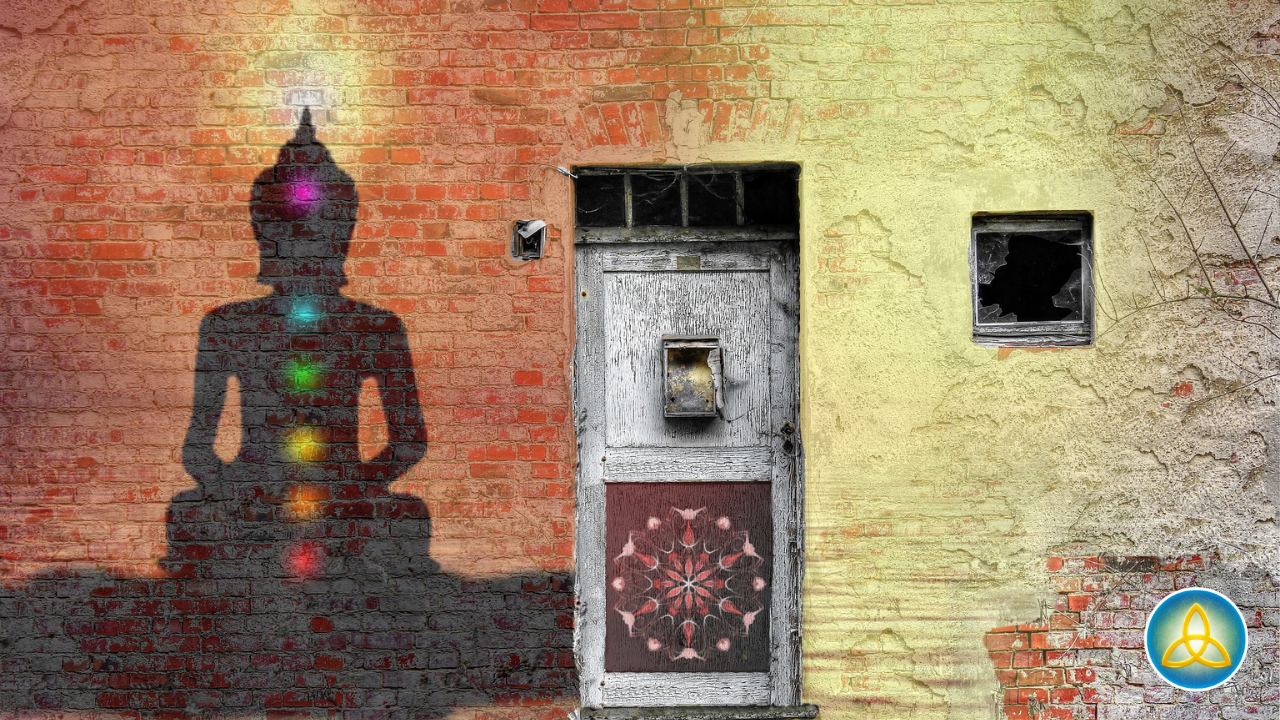
Then there was lust—not just sexual desire, but blocked creative energy for those familiar with Napoleon Hill's writings on sex magick in Think and Grow Rich. I was in a failing marriage where intimacy had broken down. The sacral chakra, that orange energy center tied to sexuality and creativity, was completely stifled. The life force that should have been flowing was instead lodged in my spine.
These were major wounds I had been walking around with for years. And the moment I truly saw them—not intellectually, but felt them with full awareness—something extraordinary happened.
The pain vanished.
One moment I was in physical agony. The next, it was simply gone.
In the Vipassana tradition, they would say the sankhara dissolved—the stored reaction released when met with equanimous attention. But whatever you call it, I had just experienced what I now help my clients access every day: a somatic release.
What Is a Somatic Release?
Dr. Bessel van der Kolk wrote that "the body keeps the score." Trauma is not just a story we tell about the past. It is a physical reality—a survival response that got stuck in the nervous system because it was never fully processed.
That "lump in your throat" when you try to speak up. The "heaviness" in your chest that won't lift. The chronic tension in your shoulders that no massage can touch. These are not random. They are messages.
I call this phenomenon a Somatic Lock—when emotional pain, unprocessed experience, or blocked life energy becomes physically held in the body. The lock persists not because you are broken, but because your nervous system is still protecting you from something it believes is dangerous.
The key to releasing it is not thinking harder. It is learning to feel with precision.
The Cost of Staying Locked
Here is what I see in my practice with high-achieving professionals: people who have done the therapy, read the books, understand their patterns intellectually—and still feel stuck.
They can explain their childhood. They can articulate their attachment style. They know why they are the way they are.
And yet the anxiety persists. The relationships still falter. The success still feels hollow.
This is the trap of living from the neck up. When we try to think our way out of pain that lives in the body, we are using the wrong tool entirely. It is like trying to hear a song by reading the sheet music—you get the structure, but you miss the music.
Meanwhile, the cost compounds. The chronic tension becomes chronic pain. The suppressed emotion leaks out as irritability, exhaustion, or numbness. The energy that should be fueling your creativity, your relationships, your sense of aliveness—it stays locked away.
How to Begin Releasing What You Carry
Three traditions have shaped my approach to somatic release: Vipassana meditation, Eugene Gendlin's Focusing, and Peter Levine's Somatic Experiencing. Here is how to begin using their wisdom.
Step One: Locate the Sensation
Stop analyzing why you feel stressed. Instead, scan your body. Where is the strongest sensation right now?
Is it hot or cold? Tight or diffuse? Pulsing or static? Heavy or hollow?
Simply observing the sensation without trying to fix it—this is the core of Vipassana. You are not pushing toward insight. You are creating the conditions for the body to speak.
Step Two: Find the "Crux"
Sometimes a sensation is so loud it needs acknowledgment before it can release. This is where Gendlin's Focusing becomes essential.
Sit with the sensation as you would sit with a friend who is struggling to articulate something important. Then ask: What is the crux of this whole thing?
Look for what Gendlin called a "handle"—a word or image that fits the feeling perfectly. Does the tightness feel like a "clenched fist" or a "heavy stone"? Is the emptiness more like "abandoned" or "waiting"?
When you find the right word, you will often feel a subtle shift—a softening, a sigh, a sense of being heard from the inside. This is the body confirming: yes, that is it.
Step Three: Discharge the Energy
Peter Levine observed that animals in the wild "shake off" the energy of a near-miss with a predator. They tremble, they run, they discharge the adrenaline—and then they return to baseline.
Humans often skip this step. We override the body's natural completion process with willpower, professionalism, or simply the demands of daily life. The energy stays trapped.
Two practices can help:
The "Voo" Breath: Inhale deeply, then exhale while making a low, vibrating "Voooo" sound. This vibrates the vagus nerve, signaling to your brain that the danger has passed. Even sixty seconds of this can shift your state. You can also "OM" as well, which I actually prefer.
Somatic Shaking: Stand and gently bounce or shake your arms and legs for one to two minutes. Let the movement be instinctual. This is not exercise—it is allowing your body to complete what it started.
What Makes This Different
You may have tried breathwork. You may have done yoga, meditation, even trauma therapy. And you may still be carrying the same weight.
The difference is precision. Generic relaxation techniques treat the body like a machine that needs to be reset. Somatic release treats the body like an intelligent system that is trying to communicate something specific.
My back pain was not random tension. It was anger at myself and grief over a marriage that was ending. Until I met those specific truths with awareness, no amount of stretching or breathing would have released them.
This is why I combine clinical training with contemplative practice. The science gives us the map. The practice gives us the territory.
Frequently Asked Questions About Somatic Release
What is a somatic release?
A somatic release is the discharge of stored tension, emotion, or trauma energy from the body. It may involve physical sensations like shaking, heat, or tears, accompanied by emotional insight or relief.
Is somatic release the same as a panic attack?
No. While a release can involve intense physical sensations, it is a controlled discharge of energy. The goal is to stay grounded and present while the body moves the energy through, not to be overwhelmed by it.
How long does it take to experience a somatic release?
You can begin to downregulate your nervous system in as little as sixty seconds using techniques like "Voo" breathing. However, releasing deep-seated patterns is an ongoing practice of awareness and equanimity—not a one-time event.
What if I feel numb and cannot locate any sensation?
Numbness is a sensation. It is often the "freeze" response—your nervous system's way of protecting you from overwhelm. Start by simply acknowledging the blankness, the fog, the absence of feeling. That acknowledgment is the beginning.
Can I do this work on my own?
You can begin on your own with the practices described here. However, working with a trained practitioner can help you access deeper layers safely, especially if you carry significant trauma.
Resources for Continued Exploration
For foundational understanding, read The Body Keeps the Score by Bessel van der Kolk. For the practice of somatic awareness, explore Waking the Tiger by Peter Levine and Focusing by Eugene Gendlin. For those ready for an immersive experience in equanimous observation, consider a ten-day Vipassana retreat through Dhamma.org.
Begin Your Release
If you recognize yourself in these words—if you have done the intellectual work but still feel stuck in your body—I invite you to explore what becomes possible when science meets soul.
I work with high-achieving professionals who appear successful on the outside but feel unfulfilled on the inside. Through individual therapy, mindfulness-based approaches, and somatic practices, we locate the locks you have been carrying and create the conditions for genuine release.
When you are ready to stop thinking about your healing and start feeling it, schedule a consultation to discuss working together.
James O'Neill is a licensed clinical professional counselor with over 20 years of experience, trained at Johns Hopkins, and the founder of Journey Mindfulness. He works with men navigating divorce, identity disruption, high-achiever burnout, and the space between external success and internal truth. He sees clients in person in Columbia, Maryland and virtually anywhere.
If something in this piece resonated, you are welcome to a free 15-minute conversation. No pressure, no pitch, just an honest talk about what is going on and whether this work is the right fit.
Disclaimer: This content is for informational purposes only and is not a substitute for professional medical advice, diagnosis, or treatment. Always seek the advice of your physician or a qualified mental health provider with any questions regarding a medical condition or psychological trauma.