The Day I Heard God on a Sinking Ferry
Jan 26, 2026Want to go deeper?🎙️ Listen to the Make Your Own World Podcast — streaming now on YouTube, Spotify, & Apple.
Facing Fear
Fear is often defined as an unpleasant emotion caused by the perception of danger—real or imagined. But that clinical definition doesn't capture what fear actually does to us. It imprisons the soul. It distorts perception. It stops us from living.
I know this because I've stood at the edge of death and found something unexpected on the other side.
How Fear Distorts Everything
Fear makes us see threats everywhere—even where none exist.
I was hiking a trail during in the early days of the pandemic when a woman yelled at me for how I was wearing my mask. It didn't matter that I was well beyond any reasonable distance. In that moment, I wasn't a person. I was a threat. A sabretooth tiger in her mind.
Later that same month, a mountain biker laughed at me for wearing a mask in the woods. "Hope the trees don't give you the virus!" he called out.
Same person. Same day. Threat to one, joke to another.
We never please everyone. Don't try.
The real question is: what is fear doing to your perception? And can you learn to work with it rather than be ruled by it?
Two Ways to Face the Unknown
I see this constantly in my clinical practice.
One client faced the prospect of his employment contract expiring. When I asked what he would do if that happened, he became angry. Why would I, his therapist, "put that idea in his head?" He believed that if he didn't think about the negative outcome, it wouldn't happen.
The contract wasn't renewed. The fear, worry, and pain came anyway—only now he was unprepared. The Stoics called this technique fear setting.
Another client faced a similar situation. Instead of avoiding the possibility, he reached out to his network immediately. He identified several landing spots for his services. He embraced uncertainty and worked with it creatively.
He didn't lose his job. But more importantly, he now carries the confidence of knowing he can handle change when it comes. And it will come.
Change and pain are inevitable. Suffering is optional.
The Bangladesh Ferry
When I was in Peace Corps Bangladesh, I lived in a village called Gopalganj, several hours south of Dhaka. To travel anywhere, I had to cross the Padma River by ferry. If you want to understand the danger, Google "Bangladesh ferry accidents."
The process was simple: take a bus to the river, board a small passenger ferry, cross, then board another bus on the other side.
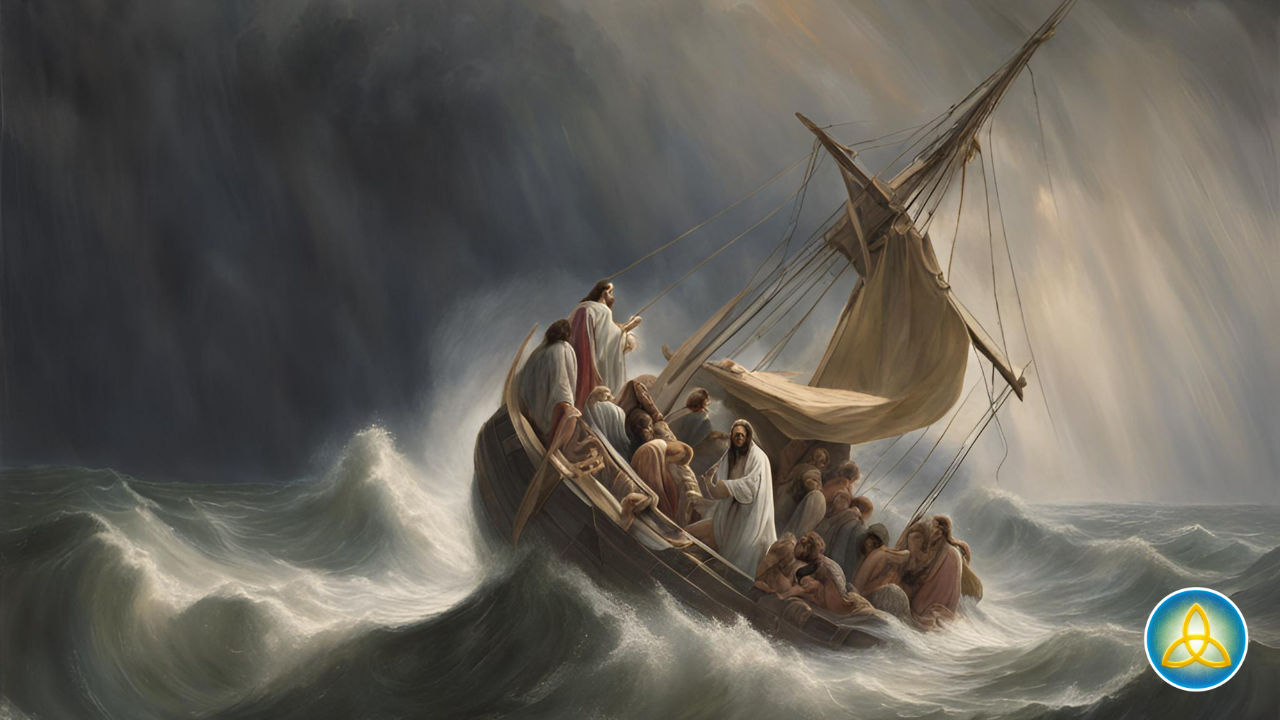
On this particular crossing, a sudden storm came upon us—fast, fierce, and without warning. The shallow-draft boat began rocking violently from side to side. Not front to back. Side to side. If you can picture the Viking ship ride at an amusement park, that's what it felt like—except the water below was real, and the current was deadly.
I had to hold on just to keep from falling off. At certain points in the pendulum motion, I was staring face-to-face with the rushing water.
I realized this was where my life would end.
And in that moment, time stopped.
A lifetime passed through my awareness. Some call it your life flashing before your eyes. I thought about my parents, my family, how devastated they would be. I prayed, and I wanted to communicate to them somehow—that I loved them, that I would be okay. I knew that, somehow. A knowing beyond knowing.
Then something shifted.
I smiled. I felt gratitude for the life I'd had. I had wanted adventure. I had found it. I couldn't complain.
I was in awe that this story—my story—was ending. We always wonder how we'll go, but we never really know. And here it was. I found tremendous peace in that.
I tried to smoke a cigarette in the rain to calm my nerves. It didn't work.
I prepared to jump.
We'd been trained that if a ferry goes down, it creates suction. You have to get far enough away or it pulls you under. Around me, men stood at the back of the boat, smoking, nervously chewing betel nut. Inside the cabin, women and children wailed, crying out to Allah to save them.
The ferry was overloaded—at least 200 people, maybe more—all believing death was moments away.
I studied the river. The current was impossibly fast, intensified by the storm. Michael Phelps wouldn't have had a chance. But I had nothing to lose.
My muscles tensed. I worked up the courage to leap.
And then it happened.
I heard the words: "DON'T JUMP, IT IS NOT YOUR TIME."
Not in my ears. Through my entire body. It vibrated through my soul.
I froze.
In that moment, I heard God. The Creator. A guardian angel. Call it whatever you want. I knew—without any doubt—that something beyond me had spoken directly to me. And I knew, with complete certainty, that the boat would make it to shore.
This made no logical sense. A rickety, overcrowded ferry in a storm on a dangerous river with a shallow draft? My brain screamed that we should be dead any moment.
But my soul knew we would live.
One of the old ferrymen—weathered face, white beard—looked into my eyes and said simply: "Okay."
His eyes were calm. Amid the storm, the wailing, the chaos. He knew too.
When the boat neared the shore, I didn't wait to disembark. I jumped onto the muddy riverbank and tried to claw my way up. I kept sliding back down. I was covered head to toe in mud, looking ridiculous. Eventually I made it to the top, and the rain washed it all away as quickly as it had come.
I was the only foreigner in the area. No one to share the story with.
The bus conductor found me and apologized for the dangerous journey. I told him I had no complaints. He'd been on that ferry too. He knew what we'd survived.
For the record, I love the Palash Bus Company of Gopalganj.
What the River Taught Me
In one of the scariest moments of my life, something revealed itself. I didn't ask for a sign. But I expressed gratitude for the life I'd been given. And something answered.
It's impossible to doubt an experience like that when it happens to you. I spent a long time journaling about it, questioning it, processing it. My conclusion: I had a purpose. It wasn't my time. I had lessons still to learn.
We all have a purpose and lessons to learn. You don't need to believe in God, attend a specific church, or follow the "right" faith. We all come from the same source.
Years later—having survived that river, and many challenges since—I can honestly say I am not afraid of death. My body will return to dust, but my soul and conscious awareness will continue. It just is.
Living Without Fear
I share this story because I believe it might help someone.
If you're still reading, there's a reason. There are no coincidences.
In psychology, we often avoid talking about death and spirituality—as if they're fringe topics, uncomfortable and unscientific. But as a therapist and a student of life, I've learned that many people have experiences like mine. They're just afraid to share them for fear of being mocked.
I've heard far too many of these stories to dismiss them. And science is increasingly studying near-death experiences. The research is compelling.
Some believe all anxiety can be traced back to a fear of death. If that's true, then releasing that fear changes everything. The happiest country in the world—the tiny Himalayan kingdom of Bhutan—encourages its people to meditate on death five times per day. Think about that.
When you're not afraid of death, you focus on living. You take risks. You spend time with the people who matter. You stop waiting.
Mindfulness helps us meet fear with presence rather than panic. It teaches us to pay attention in the present moment—to greet difficulty with awareness, even kindness.
The real meditation is the moment you're living right now.
Don't be afraid to live. Take risks. Fail. Rise.
As my mentor Dr. Wendy Hill says: "From the ashes of your despair arises the Phoenix of your truth and joy."
If Fear Is Running Your Life
I work with people who are ready to face what's been holding them back—whether that's anxiety, old stories, or the weight of experiences they've never fully processed.
If something in this story resonated, I invite you to reach out. Let's talk about what freedom from fear could look like for you.
You can also join my Mindfulness-Based Stress Reduction (MBSR) course—an 8-week program that teaches you to work skillfully with fear, stress, and the mind that creates them.
The river taught me that we're not promised tomorrow. But we have right now.
What will you do with it?
James O'Neill, LCPC is the founder of Journey Mindfulness in Ellicott City, Maryland. He's a certified MBSR instructor and therapist with over 20 years of clinical experience. Listen to the Journey Mindfulness Podcast on Spotify, Apple, and YouTube.